Selecting a fixed gas detector for a hazardous area means matching three things: the detector’s explosion protection to the area classification, the sensor technology to the target gas and conditions, and the detector location to how the gas will behave after a leak. The detector must also connect to a controller or fire & gas system that turns gas readings into alarms and actions. This guide from Akan Industrial and Automation summarises the main selection steps, with examples from the Crowcon range Akan supplies in Türkiye.
What does the area classification tell you?
Hazardous area classification defines where an explosive gas atmosphere may be present and how often. For gases and vapours, IEC 60079-10-1 divides hazardous areas into three zones:
| Zone | Explosive gas atmosphere is… | Typical examples |
|---|---|---|
| Zone 0 | Present continuously or for long periods | Inside tanks and vessels above the liquid |
| Zone 1 | Likely to occur occasionally in normal operation | Around vents, sample points, pump seals in some designs |
| Zone 2 | Not likely in normal operation; if it occurs, only for a short period | Around flanges and valves in well-ventilated process areas |
The classification also specifies the gas group (IIA, IIB, IIC) and temperature class (T1–T6) relevant to the substances present. The area classification is prepared by the plant owner or its designer; the detector selection follows from it.
How do Ex protection concepts and ATEX / IECEx marking apply?
A detector installed in a zone must carry a protection concept suitable for that zone. The two concepts most often seen on gas detectors are:
- Flameproof (Ex d) – ignition-capable parts are housed in an enclosure that withstands an internal explosion and prevents it from propagating to the surrounding atmosphere. Common for catalytic and infrared detectors and for field-mounted controllers.
- Intrinsic safety (Ex i) – the energy in the circuit is limited so that sparks or hot surfaces cannot ignite the gas. Level “ia” is suitable for Zone 0. Intrinsically safe detectors usually need barriers or galvanic isolators in the safe area.
Other concepts such as increased safety (Ex e) are often combined with Ex d in terminal compartments.
In the EU, equipment for explosive atmospheres is placed on the market under the ATEX directive and carries the Ex mark with an equipment group and category (for example II 2G, suitable for Zone 1). IECEx is the international certification scheme based on the IEC 60079 standards. Both markings state the protection concept, gas group, temperature class and equipment protection level (EPL): Ga for Zone 0, Gb for Zone 1 and Gc for Zone 2. Always check the certificate and marking against the zone, gas group and temperature class of the installation, and against any special conditions of use on the certificate.
| Concept | Principle | Typical zone suitability | Installation notes |
|---|---|---|---|
| Ex d | Explosion-containing enclosure | Zone 1 and 2 | Certified cable glands and correct enclosure maintenance required |
| Ex ia | Energy limitation, highest level | Zone 0, 1 and 2 | Needs barriers or isolators; cable parameters must be verified |
| Ex ib | Energy limitation | Zone 1 and 2 | As above |
Among Crowcon detectors, for example, the TXgard IS+ toxic and oxygen detector is intrinsically safe and ATEX certified for Zone 0, 1 or 2, while the Vortex FP controllers are ATEX Ex d flameproof for field installation. See the Crowcon fixed gas detectors and control panels pages for the range.
Which sensor technology suits which gas?
Fixed detectors use three main sensing principles. The target gas is the first selection criterion; the operating environment is the second.
| Technology | Detects | Strengths | Limitations |
|---|---|---|---|
| Catalytic bead (pellistor) | Most flammable gases and vapours, including hydrogen | Broad response; long-established technology | Needs oxygen to work; can be poisoned or inhibited by silicones, lead or sulphur compounds; regular calibration and bump testing needed |
| Infrared (IR) | Hydrocarbons and CO₂ | Not poisoned; works in low-oxygen atmospheres; fails to a detectable state | Cannot detect hydrogen; response varies by hydrocarbon, so calibration gas must match the hazard |
| Electrochemical | Toxic gases (H₂S, CO, Cl₂, NH₃ and others) and oxygen | Selective; low power; ppm-level measurement | Finite sensor life; affected by extreme temperature and humidity; possible cross-sensitivity |
Practical consequences:
- Hydrocarbon processing areas – infrared is commonly chosen for methane, propane and similar gases. Crowcon’s IR Plus and IRmax are infrared hydrocarbon detectors.
- Hydrogen – catalytic or other non-IR technologies are required; check the manufacturer’s options.
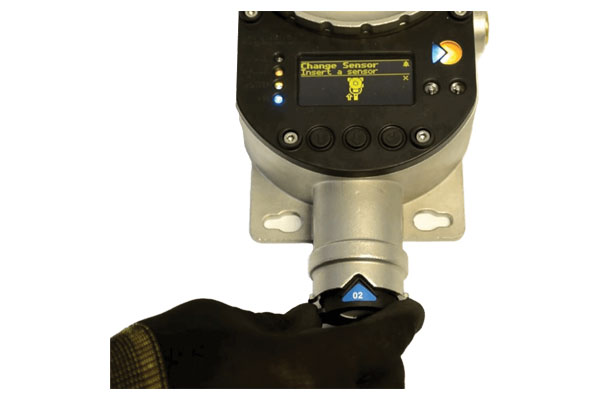
- Atmospheres with poisoning agents – avoid standard catalytic sensors or choose a poison-resistant alternative. The Xgard Bright offers Crowcon’s MPS™ sensor option, which eliminates sensor poisoning and routine calibration.
- Toxic gases and oxygen deficiency – electrochemical sensors, for example in XgardIQ, Xgard or TXgard IS+.
Mixtures of gases, the required alarm levels and the expected background concentrations should be reviewed before the sensor is fixed.
Where should gas detectors be placed?
There is no universal spacing rule; detector layout depends on the gas, the release sources and the site. Commonly applied principles:
- Gas density – heavier-than-air gases (such as propane, butane and H₂S) collect near the ground and in pits; lighter gases (such as hydrogen and methane) rise. Mount detectors accordingly.
- Release sources – place detectors close to likely leak points such as compressor seals, pump seals, flanges, valves and sample points.
- Ventilation and air flow – consider prevailing wind, forced ventilation and air intakes; enclosed spaces like compressor houses and analyzer shelters need particular attention.
- Accessibility – detectors must be reachable for calibration and maintenance. Non-intrusive calibration (for example on IRmax and Smart3G-D2) and remote interrogation reduce time spent in hazardous areas.
- Protection – shield detectors from rain, direct water jets and dust with weather protection or sampling accessories as recommended by the manufacturer.
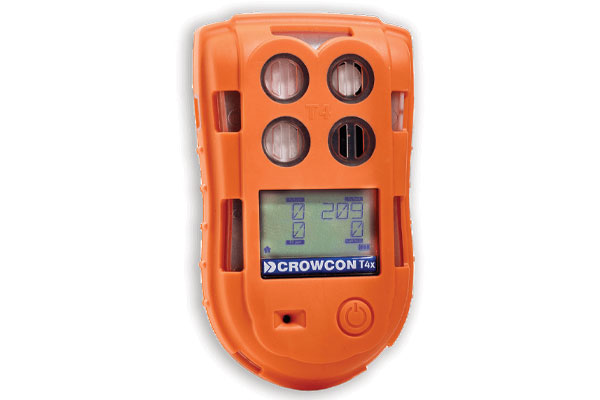
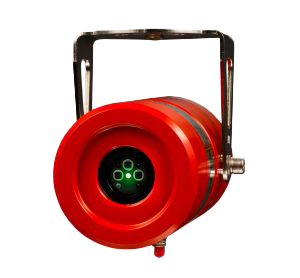
Toxic detectors protecting people are typically placed at breathing height in occupied areas; flammable detectors protecting the plant are placed where gas is expected to accumulate. Flame detection, such as Crowcon FGard flame detectors, complements gas detection where fire scenarios must also be covered. For maintenance work and confined space entry, fixed systems are supplemented by portable gas detectors.
What about SIL-certified detectors?
Some detectors and controllers are certified by the manufacturer for use in safety instrumented functions. In the Crowcon range, XgardIQ, Smart S-MS and Smart S-MS MED detectors and the Multiscan++ S2 controller are SIL 2 certified. If the plant’s safety requirements call for a SIL-rated device, check the certificate, the safety manual and the stated conditions of use. The required integrity of each safety function is defined by the plant owner.
How do you choose a gas detection controller?
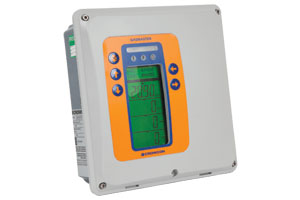
Detector signals (4–20 mA, HART, Modbus or relays, depending on model) go to a dedicated gas detection controller, a fire & gas panel, a PLC or a DCS. Selection criteria:
- Number of detectors and zones – from a few channels (Vortex, Gasmaster) to large sites (Multiscan++ up to 256 detectors).
- Installation location – safe-area rack or wall mounting, or a flameproof field controller (Vortex FP).
- Sector requirements – marine approval (Multiscan++ MED), car parks (Multiscan++ PK to EN 50545-1) or SIL 2 certification (Multiscan++ S2).
- Integration – voting, alarm levels, outputs to shutdown systems, ventilation and beacons, and communication to the DCS. Integrated fire, gas and suppression control is possible with HS81 fire & gas panels.
How Akan can help
Akan Industrial and Automation supplies Crowcon fixed and portable gas detectors, flame detectors and controllers in Türkiye. Akan selects detectors and sensors for your gases and area classification, prepares detector layouts, connects them to Crowcon controllers or your existing fire & gas system, and supports installation and commissioning. See our fire protection engineering, instrumentation and controls and oil, gas and petrochemical industry pages, or contact us with your gas list and area classification drawings.